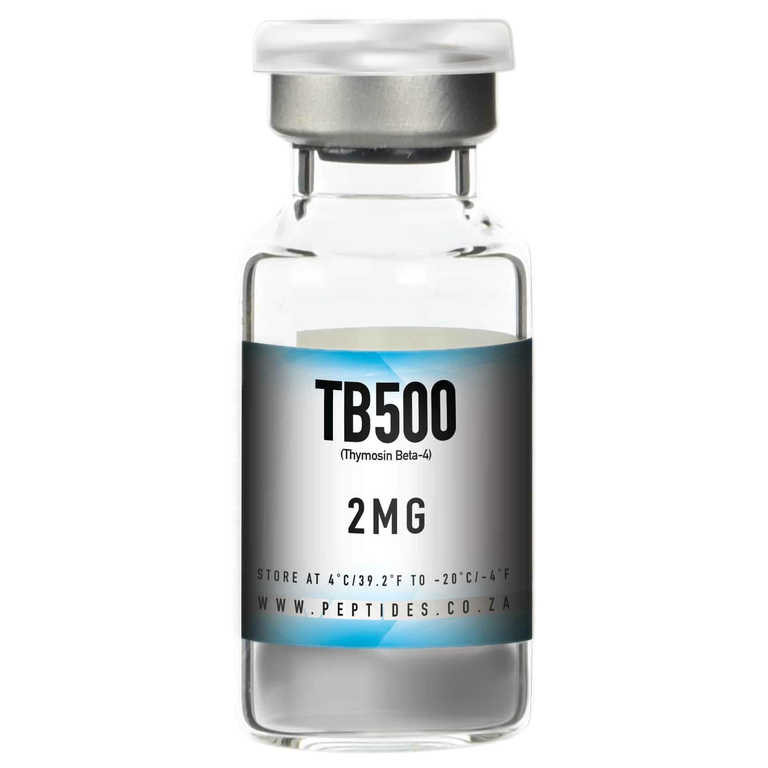
TB-500 is a nonstandard product name most clearly documented in analytical literature as N-acetyl-LKKTETQ, a seven-residue peptide derived from the actin-binding region of thymosin β4. It should not be described as full-length thymosin β4, a 43-residue, approximately 5 kDa protein.
What Are the Key TB-500 Research Specifications?
| Specification | Research record |
|---|---|
| Compound | TB-500 |
| Category | recovery |
| Listed purity | >99% |
| Molecular weight | Form-dependent; see identity section |
| Intended use | Laboratory research only |
What is the molecular identity of TB-500?
The 2012 doping-control study identified the principal TB-500 ingredient as N-acetylated LKKTETQ, corresponding to thymosin β4 residues 17–23 with an artificial N-terminal acetyl group. Commercial use of the name has not always been consistent: later analysis of internet products found misbranding and variable composition. Sequence and intact mass are therefore mandatory lot-level information.
How is TB-500 related to thymosin β4?
Full-length thymosin β4 binds G-actin and helps regulate the monomer pool through a broader structural interface. LKKTETQ lies within its central actin-binding region, but a short fragment cannot be assumed to reproduce every property of the 43-residue protein. Studies of thymosin β4-derived fragments have reported cell-migration, angiogenesis or wound-model phenotypes, yet the mechanism of isolated N-acetyl-LKKTETQ remains less fully defined than the actin-sequestering mechanism of intact thymosin β4.
Which controls distinguish fragment from full protein?
Compare N-acetyl-LKKTETQ with unacetylated LKKTETQ and full-length thymosin β4 on a molar basis. Include a scrambled peptide and vehicle. If actin regulation is claimed, use direct G-actin binding or polymerization assays; migration alone is not target engagement. In cell models, pair migration with proliferation and viability so altered cell number is not mistaken for motility.
How should TB-500 be verified and handled?
Require the full sequence, terminal groups, counterion and intact mass. LC-MS/MS peptide fragmentation is preferable to relying only on retention time. Use low-binding consumables, prepare single-use aliquots and document stability in the assay matrix. For cell work, verify endotoxin. Do not infer identity or purity from the TB-500 name or a generic HPLC trace.
Which Sources Support TB-500 Research?
- Ho et al., identification of N-acetyl-LKKTETQ as TB-500 and its metabolites, Journal of Chromatography A (2012), DOI: 10.1016/j.chroma.2012.09.043.
- Delcourt et al., analytical study of misbranded TB500/TB1000 products, Drug Testing and Analysis (2023), DOI: 10.1002/dta.3421.
How Can TB-500 Results Be Interpreted Without Overclaiming?
Begin interpretation with a falsifiable question and a predeclared primary readout. For TB-500, chemical identity, target engagement and downstream phenotype are separate layers. A change in migration, viability or gene expression does not by itself prove the proposed molecular target. Report negative and null findings, not only the largest response. Show individual observations, biological replicates and uncertainty intervals, and identify whether replication means a new well, a new culture, a new animal or a new day.
A citable TB-500 result states the species, cell line or biochemical system; exact molecular form; concentration and exposure; comparator; assay method; and statistical unit. Confirm that vehicle, pH, osmolality or precipitation did not create the phenotype. Conclusions should stay at the level tested: in vitro activity is not evidence of organism-level efficacy, and an animal phenotype is not a human claim.
What Would a Rigorous TB-500 Evidence Package Include?
A primary TB-500 research record should make four elements independently auditable. First, the identity package should include the exact sequence or structure, terminal and side-chain modifications, counterion or ester, intact-mass confirmation, chromatographic method, content assignment and relevant impurity tests. Second, the exposure package should demonstrate stock recovery, solution stability and the concentration that actually reached the assay. Nominal vial mass alone is not an exposure measurement.
Third, mechanism should be demonstrated near the proposed target. For TB-500, that means using the receptor, enzyme, binding partner or pathway described in the article with a blocking, knockout or orthogonal-perturbation control. Downstream endpoints should follow a plausible time course and should survive an independent assay method. Fourth, the phenotype package should include matched vehicle, positive and negative controls, biological replication and transparent reporting of exclusions.
For recovery research, cross-study comparisons are strongest when laboratories use the same molecular form and report results on a molar basis. Differences in formulation, serum binding, species, receptor density and sampling time can reverse an apparent rank order. A literature summary should therefore distinguish direct biochemical evidence, controlled cell data, animal findings and human observations instead of presenting them as one evidence tier. This framework makes TB-500 content useful for protocol planning while keeping every conclusion traceable to the experiment that supports it. Archive the protocol, raw data and lot documentation so another laboratory can repeat the comparison without reconstructing hidden assumptions.
Before publication, test robustness by changing one plausible nuisance variable—operator, day, serum lot, plate format or analytical column—while holding the TB-500 hypothesis constant. Report whether the conclusion survives that challenge. This small validation step often reveals matrix effects, adsorption or batch drift that a technically replicated single run cannot detect.
Is TB-500 for Research Use Only?
TB-500 is supplied for laboratory research only. It is not for human or veterinary use.
What Are Common Questions About TB-500?
What is TB-500?
TB-500 is a nonstandard product name most clearly documented in analytical literature as N-acetyl-LKKTETQ, a seven-residue peptide derived from the actin-binding region of thymosin β4. It should not be described as full-length thymosin β4, a 43-residue, approximately 5 kDa protein.
How should researchers verify TB-500?
Confirm the exact molecular form on the lot certificate and pair chromatographic purity with an orthogonal identity method such as mass spectrometry or NMR. Use the molecular weight, counterion and content stated for that verified form when calculating molarity.
Is TB-500 intended for human use?
TB-500 is listed for controlled laboratory research only. It is not intended for human or veterinary use.